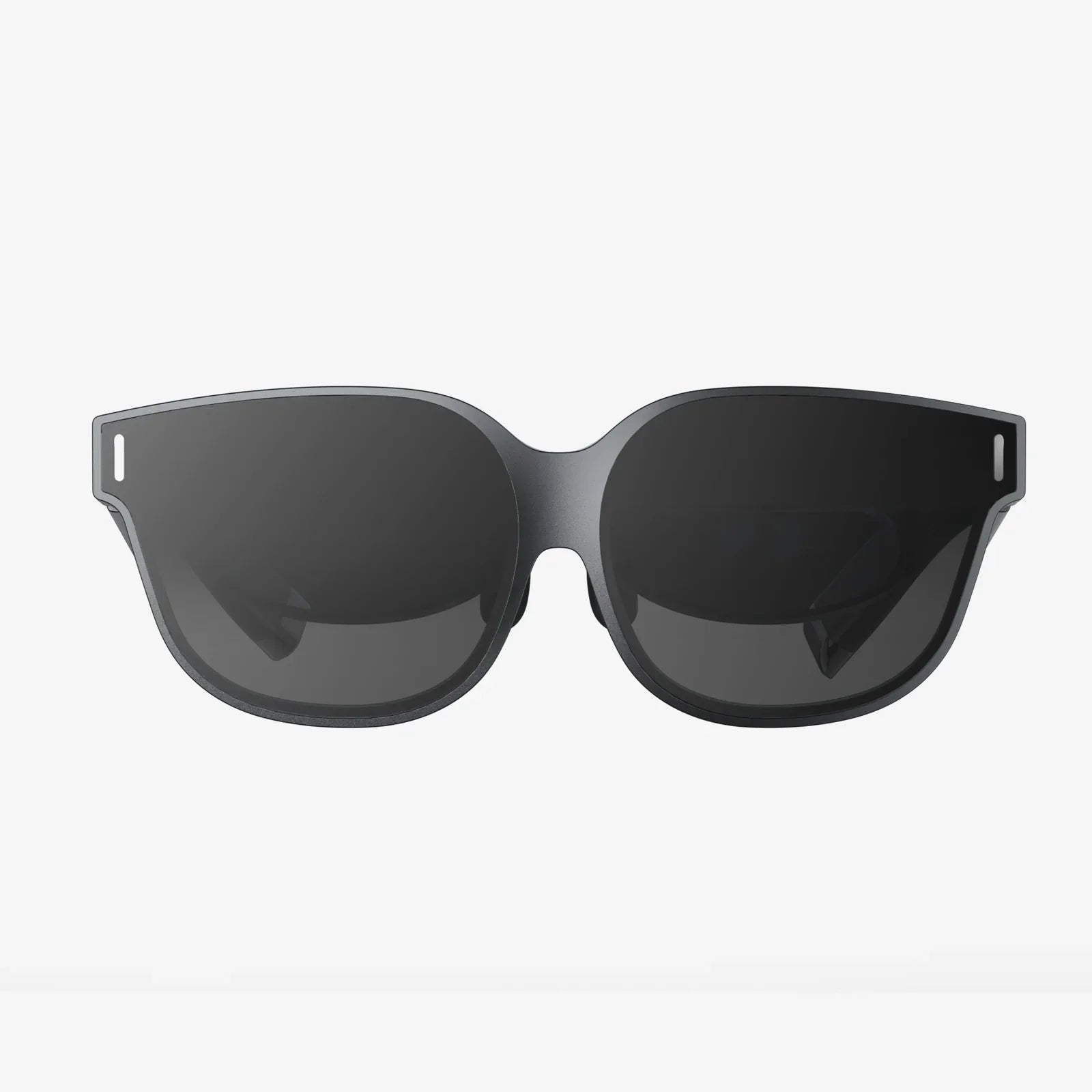
The Evolution of Interaction: Holographic Displays From Concept to Commercial Reality
Once confined to the fantastical realms of science fiction, holographic display technology has leaped from theoretical physics laboratories into the dynamic heart of modern business. In today's experience-driven economy, where genuine engagement is paramount, these stunning visual innovations are fundamentally reshaping how we interact with information, products, and even each other. No longer just a visual spectacle, holographic displays are emerging as a game-changing asset, transforming everything from corporate storytelling to customer engagement and educational experiences.
Imagine a corporate timeline that transcends static images, becoming an immersive, three-dimensional journey through a company’s rich legacy. Envision a product not merely showcased on a shelf, but brought to life in a virtual space, offering a 360-degree interactive experience that captivates potential customers. This isn't a distant dream; it's the present reality enabled by advanced holographic display technology, ushering in an era of more meaningful and personalized interactions across various sectors.
The Journey of Holography: From Pioneering Minds to Practical Applications
The concept of holography is far from new, yet its practical application in the commercial sphere is a testament to decades of scientific endeavor and technological refinement. The intellectual groundwork was laid as far back as 1947, when physicist Dennis Gabor introduced the theory of holography while working to improve electron microscopes. His groundbreaking work earned him the Nobel Prize in Physics in 1971. A significant advancement followed in 1962 with Yuri Denisyuk from the Soviet Union, who invented the white-light reflection hologram—the first hologram viewable under ordinary incandescent light, a crucial step towards broader accessibility.
While these early years were primarily experimental, the past decade has witnessed an unprecedented surge in practical applications. What began as a novel concept has rapidly evolved into a viable, powerful tool, particularly within corporate and brand experience settings. This evolution has been fueled by relentless innovation in related fields, propelling holographic display technology beyond the laboratory and into the very fabric of business operations. Advancements in sophisticated components like spatial light modulators and light field displays have been instrumental in creating the more realistic, dynamic, and interactive holograms we see today.
This journey underscores a fundamental shift: from simply understanding how to create a 3D image, to leveraging that capability to enhance customer engagement, interactively convey complex information, and foster unprecedented levels of immersion.
Beyond Spectacle: Crafting Meaningful Interactions with Holographic Displays
The true power of holographic display technology lies not just in its ability to dazzle, but in its capacity to create deeply meaningful and personalized interactions. In a world saturated with digital content, holograms cut through the noise by offering an unparalleled level of engagement that flat screens simply cannot replicate. They transform passive viewing into active participation, making every interaction memorable and impactful.
Businesses are quickly realizing the immense potential for customization that holographic displays offer. This technology allows them to align visual experiences precisely with their specific objectives, whether it's educating visitors in a corporate museum, launching a new product line with an unforgettable flourish, or providing unique training simulations. For instance, imagine a retail environment where customers can virtually interact with a new product, rotating it 360 degrees, exploring internal components, or even customizing its features in real-time before making a purchase. This isn't just selling; it's an immersive buying experience.
Moreover, holographic solutions offer a unique platform for storytelling, allowing companies to present their narratives, values, and innovations in compelling, multi-dimensional ways. This ability to make information "come alive" can significantly transform customer perception, deepening brand loyalty and fostering stronger connections. To delve deeper into how this technology is revolutionizing customer engagement, explore our article on Holographic Displays: Transforming Business Engagement & Customer Experience.
Practical Insight: For businesses considering integrating holographic displays, start by identifying key touchpoints where interaction and immersion are critical. Could it be a lobby display showcasing company achievements, an event booth attracting attention with interactive product demos, or an educational exhibit simplifying complex concepts? Pinpointing these areas will help define the scope and maximize the return on investment for your holographic initiatives.
The Core Science and Enabling Technologies Behind Holographic Innovation
The breathtaking visuals of holographic display technology are the culmination of a sophisticated blend of optics, computer graphics, and advanced data processing. At its heart, this multidisciplinary field manipulates light to create three-dimensional images that appear to float in space without the need for special glasses.
The Mechanics of Light Manipulation
Two primary components are critical to this magic: light field displays and spatial light modulators. Light field displays are engineered to capture and project all the rays of light present in a given scene. This comprehensive approach allows for an incredibly realistic representation of objects, as viewers can change their perspective and see different sides of the holographic image, much like viewing a real object. Spatial light modulators (SLMs), on the other hand, are devices that control the phase and amplitude of light waves. By precisely modulating light at a pixel level, SLMs can reconstruct the wavefront of light scattered from a real or virtual object, thereby creating the holographic image.
The Power of Connectivity and Digital Replication
Beyond the core optical mechanisms, cutting-edge supporting technologies are crucial for realizing the full potential of dynamic, interactive holograms. 5G technology plays a pivotal role, especially when it comes to real-time data transmission and ensuring low-latency performance. The high-speed data transfer capabilities of 5G make it possible to stream the incredibly complex data required for sophisticated holographic projections without lag, significantly enhancing the user experience. Imagine interacting with a live 3D model that responds instantly to your gestures—this is where 5G's robust connectivity shines.
Furthermore, digital twins are becoming increasingly significant in the functioning of holographic displays. These are virtual replicas of physical objects, systems, or processes, built with real-world data. When combined with holographic technology, digital twins allow for an interactive, true-to-life visualization of complex systems. For example, an engineer could interact with a holographic digital twin of a manufacturing plant, analyzing its performance, testing changes, or identifying potential issues in a highly intuitive 3D environment. This synergy enables businesses to visualize, analyze, and optimize operations with unprecedented clarity.
To gain a deeper understanding of the intricate scientific principles and technological breakthroughs powering this visual revolution, we invite you to read our comprehensive article on The Science Behind Holographic Displays: Powering Tomorrow's Visual World.
Practical Applications and Future Horizons for Holographic Displays
The reach of holographic display technology extends far beyond corporate boardrooms and customer experience centers, revolutionizing diverse sectors and opening up exciting new possibilities for human-computer interaction.
- Education and Training: Holographic classrooms can bring historical figures to life, allow students to dissect virtual organs, or explore architectural wonders in 3D, making learning incredibly immersive and engaging.
- Healthcare: Surgeons can use holographic projections of patient anatomy during complex procedures, enhancing precision. Medical students can practice procedures on realistic 3D models.
- Entertainment: From holographic performers at concerts to interactive exhibits in museums and theme parks, the technology is transforming how we experience leisure and culture.
- Design and Engineering: Architects can walk through holographic blueprints, designers can manipulate product prototypes in 3D space, and engineers can collaborate on complex models remotely.
- Retail and Marketing: Beyond product visualization, brands can create stunning, attention-grabbing displays that differentiate them in competitive markets.
Actionable Advice for Businesses: When considering implementing holographic displays, evaluate providers not just on the visual quality, but also on the ease of content creation and integration with existing systems. Look for solutions that offer robust software development kits (SDKs) and compatibility with standard 3D modeling tools to ensure you can easily generate and update your holographic content. Furthermore, consider the environmental factors: lighting conditions, viewing angles, and space requirements are all crucial for optimal performance.
The future of holographic display technology is poised for even greater breakthroughs. We can anticipate more compact, cost-effective, and higher-resolution displays, making them accessible to a wider range of businesses and even consumer applications. The integration with artificial intelligence and advanced gesture recognition will lead to even more intuitive and natural interactions, blurring the lines between the digital and physical worlds. Real-time holographic telepresence, where individuals can appear as lifelike 3D projections in remote locations, is also rapidly progressing, promising to revolutionize global communication and collaboration.
From its theoretical genesis in a scientist's lab to its current role in revolutionizing boardrooms and customer experiences, holographic display technology has journeyed remarkably. It stands as a testament to human ingenuity, offering a glimpse into a future where visual communication is not just seen, but truly experienced. As the technology continues to evolve, its capacity to create compelling, interactive, and personalized engagements will only grow, fundamentally reshaping how businesses connect with their audiences and how we all perceive and interact with the world around us.